
Foot pain is no longer limited to seniors or people with medical conditions. Long working hours, hard flooring, poor footwear, and sedentary lifestyles have made foot discomfort common across all age groups. However, if your feet hurt by the end of the day, your everyday slippers could be one of the biggest reasons. This is where orthopaedic slippers for foot pain come into the picture.
In this blog, we’ll explore why foot pain happens, how the wrong slippers make it worse, and how orthopaedic slippers like Upstrol can support better foot health and daily comfort.
Common causes of foot pain
Foot pain can develop for several reasons, often related to daily habits rather than injuries. Some of the most common causes include:
- Standing or walking for long hours on hard surfaces
- Wearing flat or thin-soled slippers at home
- Lack of arch support, especially for flat feet
- Excess pressure on heels and the ball of the foot
- Age-related wear and tear and strain on joints and soft tissues
Conditions such as plantar fasciitis, heel pain, mild arthritis, or general foot fatigue often start as small discomforts and gradually worsen when ignored.
How wrong slippers increase pain
Many people assume that slippers are harmless because they’re worn indoors. In reality, poorly designed slippers can significantly increase foot stress. Flat slippers with thin soles offer no shock absorption, forcing your feet to absorb the impact of every step.
Without arch support, the foot collapses inward, straining muscles and ligaments. Over time, this leads to heel pain, arch pain, and even knee or lower back discomfort.
Loose slippers also create instability, making your feet grip constantly to stay in place. This unnecessary muscle effort adds to fatigue and pain by the end of the day.
How orthopaedic slippers reduce foot stress
Orthopaedic slippers are designed to address these problems at their root. Unlike regular slippers, they focus on foot alignment, pressure distribution, and shock absorption. By supporting the natural shape of your foot, orthopaedic slippers help reduce strain on sensitive areas.
A cushioned sole absorbs impact, reducing stress on the heels. Arch support distributes body weight evenly instead of concentrating pressure on one spot. A stable heel base improves balance and reduces unnecessary foot movement.
Together, these features make orthopaedic slippers an effective form of foot pain relief footwear for daily use.
Features to look for in foot-pain slippers
Not all slippers marketed as “comfortable” are truly supportive. When choosing the best slippers for foot health, look for these key features:
- Proper arch support – Helps maintain natural foot alignment
- Cushioned midsole – Absorbs shock and reduces heel pressure
- Firm heel support – Improves stability and balance
- Anti-slip outsole – Prevents slipping on smooth indoor surfaces
- Correct fit – Prevents foot sliding and muscle strain
These elements work together to reduce pain and prevent further stress during everyday movement.
How Upstrol supports foot health
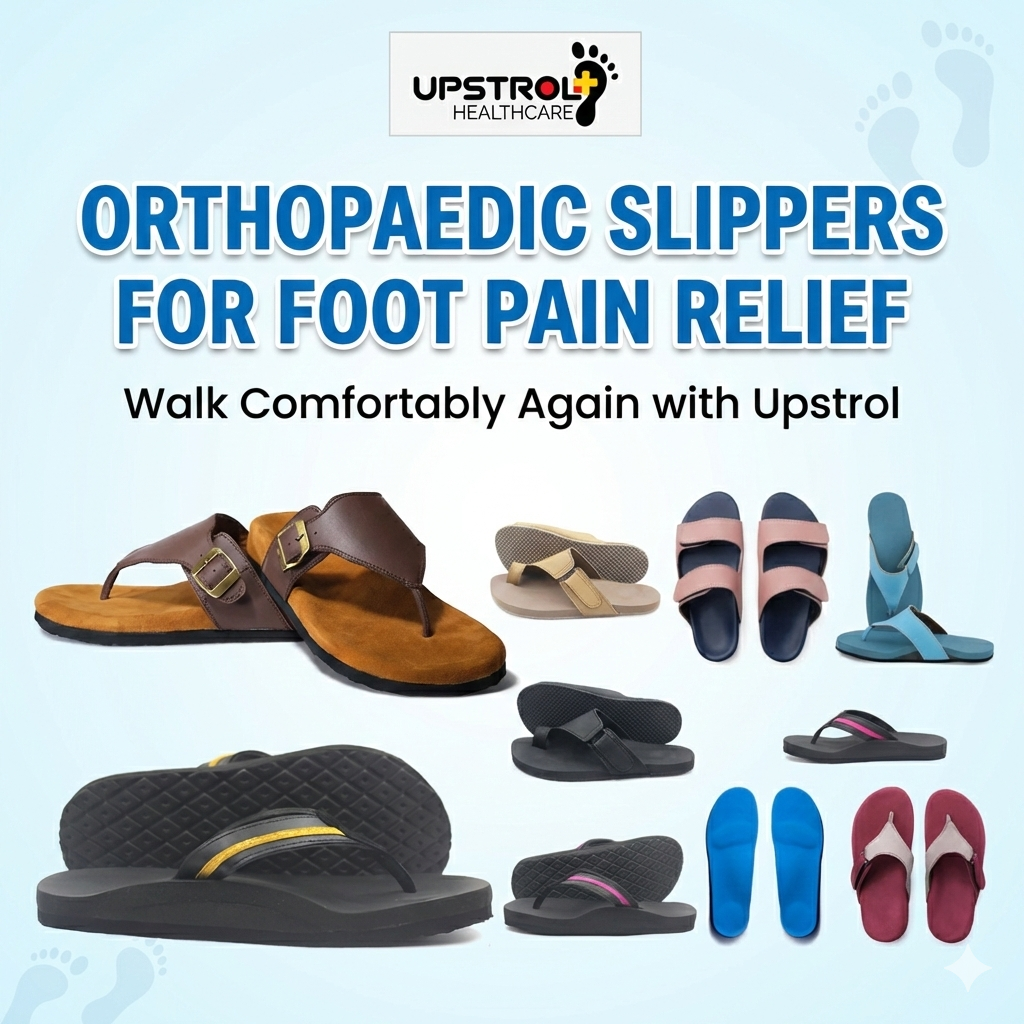
Upstrol orthopaedic slippers are designed with daily Indian lifestyles in mind. They combine comfort with functional support, making them suitable for long hours of indoor use. The contoured footbed supports the arch without feeling too rigid, while the cushioned sole softens impact with every step.
Upstrol slippers are lightweight, reducing fatigue caused by heavy footwear, and feature anti-slip outsoles for safety on tiled and marble floors commonly found in Indian homes. The balanced design helps reduce pressure on heels and arches, making them effective slippers for foot pain without feeling bulky or medical.
For people dealing with mild to moderate discomfort, Upstrol offers everyday relief while encouraging better foot posture and movement.
Daily use benefits
Wearing orthopaedic slippers daily can make a noticeable difference over time. Regular use helps:
- Reduce end-of-day foot fatigue
- Improve walking comfort at home
- Lower strain on knees and lower back
- Support long hours of standing during household or work-from-home activities
- Promote better foot health in the long run
While orthopaedic slippers are not a replacement for medical treatment in severe cases, they play a valuable role in preventing pain from worsening and supporting recovery from daily stress.
FAQs
Which slippers are best for foot pain?
Slippers with arch support, cushioning, and a stable sole are best for foot pain. Orthopaedic slippers are specifically designed to reduce pressure and improve comfort during daily use.
Do slippers help plantar fasciitis?
Yes. Wearing supportive slippers instead of flat or barefoot walking at home can help reduce heel strain and provide relief for plantar fasciitis, especially when worn consistently.
Can foot pain be reduced at home?
In many cases, yes. Switching to supportive footwear, resting your feet, gentle stretching, and avoiding flat slippers can significantly reduce everyday foot pain.